17 Minutes Only!

Wednesday, 19 November 2014

The 3 Decisions That Will Change Your Financial Life


There’s nothing worse than a rich person who’s chronically angry or unhappy. There’s really no excuse for it, yet I see this phenomenon every day. It results from an extremely unbalanced life, one with too much expectation and not enough appreciation for what’s there.
Without gratitude and appreciation for what you already have, you’ll never know true fulfillment. But how do you cultivate balance in life? What’s the point of achievement if your life has no balance?
For nearly four decades, I’ve had the privilege of coaching people from every walk of life, including some of the most powerful men and women on the planet. I’ve worked with presidents of the United States as well as owners of small businesses.   
Across the board, I’ve found that virtually every moment people make three key decisions that dictate the quality of their lives.
If you make these decisions unconsciously, you'll end up like majority of people who tend to be out of shape physically, exhausted emotionally and often financially stressed. But if you make these decisions consciously, you can literally change the course of your life today. 
Decision 1: Carefully choose what to focus on.
At every moment, millions of things compete for your attention. You can focus on things that are happening right here and now or on what you want to create in the future. Or you can focus on the past.
Where focus goes, energy flows. What you focus on and your pattern for doing so shapes your entire life. 
Which area do you tend to focus on more: what you have or what’s missing from your life?
I’m sure you think about both sides of this coin. But if you examine your habitual thoughts, what do you tend to spend most of your time dwelling on? 
Rather than focusing on what you don’t have and begrudging those who are better off than you financially, perhaps you should acknowledge that you have much to be grateful for and some of it has nothing to do with money. You can be grateful for your health, family, friends, opportunities and mind.
Developing a habit of appreciating what you have can create a new level of emotional well-being and wealth. But the real question is, do you take time to deeply feel grateful with your mind, body, heart and soul? That’s where the joy, happiness and fulfillment can be found. 
Consider a second pattern of focus that affects the quality of your life: Do you tend to focus more on what you can control or what you can’t?
If you focus on what you can’t control, you’ll have more stress in life. You can influence many aspects of your life but you usually can’t control them. 
When you adopt this pattern of focus, your brain has to make another decision:  

Decision 2: Figure out, What does this all mean?

Ultimately, how you feel about your life has nothing to do with the events in it or with your financial condition or what has (or hasn't) happened to you. The quality of your life is controlled by the meaning you give these things.
Most of the time you may be unaware of the effect of your unconscious mind in assigning meaning to life’s events. 
When something happens that disrupts your life (a car accident, a health issue, a job loss), do you tend to think that this is the end or the beginning?
If someone confronts you, is that person insulting you, coaching you or truly caring for you?
Does a devastating problem mean that God is punishing you or challenging you? Or is it possible that this problem is a gift from God? 
Your life takes on whatever meaning you give it. With each meaning comes a unique feeling or emotion and the quality of your life involves where you live emotionally. 
I always ask during my seminars, “How many of you know someone who is on antidepressants and still depressed?” Typically 85 percent to 90 percent of those assembled raise their hands.
How is this possible? The drugs should make people feel better. It's true that antidepressants do come with labels warning that suicidal thoughts are a possible side effect.
But no matter how much a person drugs himself, if he constantly focuses on what he can’t control in life and what’s missing, he won't find it hard to despair. If he adds to that a meaning like “life is not worth living,” that's an emotional cocktail that no antidepressant can consistently overcome. 
Yet if that same person can arrive at a new meaning, a reason to live or a belief that all this was meant to be, then he will be stronger than anything that ever happened to him.
When people shift their habitual focus and meanings, there’s no limit on what life can become. A change of focus and a shift in meaning can literally alter someone's biochemistry in minutes. 
So take control and always remember: Meaning equals emotion and emotion equals life. Choose consciously and wisely. Find an empowering meaning in any event, and wealth in its deepest sense will be yours today. 
Once you create a meaning in your mind, it creates an emotion, and that emotion leads to a state for making your third decision:

Decision 3: What will you do?  

The actions you take are powerfully shaped by the emotional state you're in. If you're angry, you're going to behave quite differently than if you're feeling playful or outrageous. 
If you want to shape your actions, the fastest way is to change what you focus on and shift the meaning to be something more empowering.
Two people who are angry will behave differently. Some pull back. Others push through.
Some individuals express anger quietly. Others do so loudly or violently. Yet others suppress it only to look for a passive-aggressive opportunity to regain the upper hand or even exact revenge.  
Where do these patterns come from? People tend to model their behavior on those they respect, enjoy and love.
The people who frustrated or angered you? You often reject their approaches.
Yet far too often you may find yourself falling back into patterns you witnessed over and over again in your youth and were displeased by. 
It’s very useful for you to become aware of your patterns when you are frustrated, angry or sad or feel lonely. You can’t change your patterns if you’re not aware of them.
Now that you’re aware of the power of these three decisions, start looking for role models who are experiencing what you want out of life. I promise you that those who have passionate relationships have a totally different focus and arrive at totally different meanings for the challenges in relationships than people who are constantly bickering or fighting. 
It’s not rocket science. If you become aware of the differences in how people approach these three decisions, you’ll have a pathway to help you create a permanent positive change in any area of life. http://www.entrepreneur.com/article/239312

Thursday, 13 November 2014

How I Gained 10,000 Twitter Followers In One Year Without Paying A Dime


Little did I know when I woke up on October 27, 2014 that I would experience the greatest day of my entire life.
It was a brisk, grey morning and I clearly remember having this strange, sensational feeling that something big was on the horizon.
I arrived at work, opened up my laptop and began scouring various digital marketing journals to see what great concepts I could share with my social connections; something I do each and every day.
As I logged into my Twitter account, I couldn’t believe my eyes when I saw that I had hit the coveted 10,000 follower count…I was now Internet famous; the dream of every Millennial!
Ok, maybe it wasn’t so dramatic, but gaining 10,000 followers in one year was pretty awesome.
One of the most common questions I receive from businesses and brands is how to effectively build up their company’s social media handles in a way where they can continuously connect with new audiences and potential customers.
The concept of using social media to drive brand awareness, create dialogue and improve conversions is still relatively new. I personally don’t remember businesses and brands caring about Facebook or Twitter until around 2010. Even then, most people thought social media had only two purposes, which were to offer basic tips and advice or simply update audiences on the company’s internal activities.
We now understand that social media plays a much more significant role in supporting a brand’s ability to appear within premier organic search listings, as well as drive conversions and transactions.
The problem is, understanding the value of social media and actually being able to build up a robust, meaningful follower list to solicit conversions from are two different concepts and can seem rather daunting.
By applying just 15 minutes a week to build up your Twitter followers, you too can grow the size of your connections by an extraordinary amount; allowing you to catalyze top-of-mind awareness for your brand and keep you connected to new and returning potential customers.
By adhering to the following recommendations, you too can experience the best day ever, just as I did!
Grab Followers From LinkedIn
The basic concept behind social media is all about connecting with other like-minded individuals to create dialogue – a concept that is now so prevalent in our society that it feels almost second nature.
However, far too many businesses and brands do not realize that they need to actively engage with other individuals and authorities to generate buzz around their name.
Social media is not just about sharing clever posts about sales or pictures from around your office. It’s also about being positioned in specific communities and areas that are relevant to your industry and services.
For example, even if your business is completely dedicated to a B2C market, you can and should still utilize LinkedIn as an addition to your ongoing social media efforts.
Though LinkedIn is primarily dedicated to working professionals who are interested in sharing experiences related to industry news, you can still benefit from connecting to your competitors and individuals that work in similar positions or environments.
You might not be catering directly to potential customers, but you are still interacting with other industry leaders and authorities. With these connections, you can leverage their social audiences to drive your brand’s identity, mission and goals by reaching out and speaking directly to them.
The same idea can be applied to building your company’s Twitter followers.
After tracking down their personal Twitter handles, start following them and don’t forget to keep track of who follows you back.
Contribute To Your Community
Whether you have a passion for writing or not, it remains a critical component for building your brand’s authority.
As a Director of Organic Search with seven years of experience in the digital marketing industry, I contribute on a regular basis to a number of reputable online journals that are dedicated to my area of work.
Because of the high quality and frequent publications of my articles, I have been able to build up my personal identity and brand to audiences that are completely relevant to my career. I am even considered an expert in my field, despite my personal opinion that titles like “expert” and “guru” are silly in an industry that’s ever evolving.
And, with each piece that I put out comes a significant influx in Twitter followers.
Businesses and brands should do the same thing. Whether it is the owner, the CEO or even one of the employees, your company should have a designated representative to embody your business’s voice and contribute to journals, publications and blogs that are relevant to your industry, services and target demographics.
A great way to find an outlet to submit to is through professional platforms like LinkedIn, which can help identify particular organizations that are inline with your company’s mission, and then simply reach out and ask if you can contribute to their company blog or journal.
There are also hundreds of publications and journals that are dedicated to possible every industry in the world. Perform a Google search to see what journals exist in your specific space and contact their Webmaster or editor to see if they are interested in letting you create content for them on a regular basis.
If and when you are accepted, make sure you are able to include a small description on your company or the author you have chosen, as well as links to your branded social profiles so that readers are able to easily connect with you.

Follow. Unfollow. Follow. Repeat.

Here it is, the tactic so confidential that it could be considered Coca-Cola’s secrete ingredient…
Simply go onto Twitter and check out:
  • A competitor’s profile
  • A journal dedicated to your industry
  • A well-known consumer advocate or industry authority
and…is the anticipation killing you yet?
Follower their followers!
Ta-da! It’s that easy.
Spending 15 to 20 minutes following other brand’s established list of followers is the easiest way to connect with relevant audiences and build your brand’s twitter followers.
Follow as many people as you can and in a week or so, see how many people followed you back.
Unfollow each profile that did not return the favor and continue to repeat the process once a week.
Make sure that your list of those you follow does not exceed the number of connections that follow you; otherwise you stand the risk of Twitter shutting down your profile.

Free Advice Never Sounded So Nice

There it is – the easiest, free advice you will ever receive when it comes to building up your brand’s Twitter connections.
By identifying relevant organizations and groups in professional platforms like LinkedIn, you are able to successfully connect with other like-minded individuals that are interested in what you do and the industry you are in.
Creating unique content that can be hosted on third-party journals and websites gives you direct access to consumers that are interested in what you do and what you have to offer. It also does a great job of catalyzing brand awareness and positions your brand as a true, reliable authority.
And, taking fifteen to twenty minutes a week to follow and unfollow individuals connected to other relevant Twitter handles will allow you to build a robust, meaningful list of connections that can be engaged and converted into returning customers.
Following these recommendations is a sure way to find yourself waking up with a similar gut feeling that I experienced, knowing that your whole life is about to change for the good.
With 10,000 followers, I am now a millionaire and always have people to hang out with on the weekends. There isn’t a restaurant that I can’t get into on a Saturday night and my cell phone is constantly ringing with eager journalists from Time magazine trying to schedule interviews.
Well, not exactly.
I am able to leverage my followers in ways that directly benefit my work, my contributions and my clients’ online visibility.
With 10,000 followers, your company stands to increase its own visibility in search listings, increase its online brand awareness, and create a revolving door of attracting new consumers and turning them into returning customers.http://www.socialmediaexplorer.com/social-media-marketing/how-i-gained-10000-twitter-followers-in-one-year-without-paying-a-dime/?utm_source=feedburner&utm_medium=feed&utm_campaign=Feed%3A+SocialMediaExplorer+%28Social+Media+Explorer%29

Tuesday, 11 November 2014

Take Back Your Mornings (Infographic)


Great mornings don't just happen. They're planned and nurtured. It's about creating a routine that works, that keeps you inspired and not just wired, about making you happier and satisfied. The moves can take some adjusting, but will put you in the company of some of the mostsuccessful creatives and leaders working today. This infographic pulls together research from sleep experts and productivity thought leaders to help you not only take back your morning, but add hours to your week.
Click to Enlarge+
How to Use Social Media to Find Customers (Infographic)

Tell us your favorite morning tip in the comments below. http://www.entrepreneur.com/article/238661

Wednesday, 5 November 2014

As Internet users adapt to old tricks, scammers find new tactics to exploit


Greetings to you, my friend.
I know this will come as a surprise to you, because you do not know me. My name is Abdul Al-Shallah and I am the son of a deposed government official in Nigeria.
Sound familiar? It’s a boilerplate opening for one of the most common scams in the known world — the Nigerian scam, also known as the “419 scam” or the advance fee scheme. The elements are always the same: someone (preferably royalty or some sort of official) has come into a lot of money, but needs another person outside of the country to use their money for a bribe (or to pay legal fees among other means) to spring the money free. The result is also predictable, with a wire transfer to a con artist’s account and a fake check that confirms a scam has taken place.
This scam is a hallmark of the Internet, but it’s actually much older than that — the advance fee scheme in its modern incarnation dates back to the early 1980s, and various forms can be traced back to before the 20th century. The reason that it sticks around, unsurprisingly, is because it never ceases to swindle millions of dollars from duped victims. The scheme, and many others like it continue to flood inboxes daily, often hitting the Spam folder before you ever lay eyes on it, waiting for a more trusting person to make a trip to the Western Union.
But that’s not to say that Internet scammers are resting on their laurels and leaving their dirty work to these classic methods. As Internet users become more sophisticated (and laugh at the advances of the forlorn Nigerian prince or similarly befallen individual), the chances of finding a willing innocent victim slowly dwindles. Like any other industry, scammers are looking for smarter, more efficient ways to reach their big payouts and to keep their “businesses” running smoothly, so they are forced to adapt and reach new extremes to get their money.
Now, security experts are seeing disturbing trends among scammers that make the old schemes appear to be child’s play. Appealing to the emotional pull of a victim is now just part of the scheme, which now includes familiarity dupes and long-term schemes to raid a bank account. These cons are more targeted, more ruthless and can take out even large corporations and entire governmental programs. There’s a new evolution in Internet con artistry, and it’s putting everyone at risk.
Check out the four new and scary ways con artists are getting their money on the Internet, and real-life examples of how they work.
What do you think of these schemes? Let us know in the comments.

The long con

In the past few years, “spear-phishing” has risen to become one of the biggest trends in online scamming. A play on the hacking technique “phishing,” spear-phishing is a technique that con artists use to specifically target individuals or companies and gain access to information or bank accounts. This method has also become the tactic du jour for cyber criminals interested in attacking big business or government officials. But, that doesn’t mean spear-phishing is too advanced for the regular user.
In a spear-phishing scenario, a hacker is able to crack into an inbox of an unsuspecting victim. But, instead of doing a smash-and-grab and gathering as much information as possible, the criminal takes his time — akin to casing a house before a robbery. Then, the hacker masquerades as an email account of a relatively important company, like Bank of America. The hacker then sends a personalized email explaining to the victim that her account has been compromised, including the victim’s account number to establish credibility, and urges her to quickly change her name and password via a link provided in the email. The victim is duped into downloading nasty malware onto her computer, and the con artist is able to walk away with cash in his pocket.
“They dig deeper down. They know who you’re talking to and what the subject matter is about,”  says George Waller, executive vice president at New Jersey-based cybersecurity software corporation StrikeForce Technologies. “Then they’ll most likely spear-phish you with a malicious attachment or direct you to a site with a malicious download on it.”
And, at times, spear-phishing can drift into the absurd, like the story told by ESET Security Evangelist Stephen Cobb of hackers who had used a victim’s account to steal his money by stealing his heart. The hackers broke into a wealthy victim’s Gmail account and began rifling through the inbox. While reading the emails, they discovered the victim enjoyed frequenting dating websites, looking for a potential long-term mate. The hackers found the victim on the website and posed as a beautiful woman who was romantically interested in him. The hackers proceeded to forge a long-term relationship with him before begging for “emergency” money to be wired via Western Union. The victim readily accepted and the con went off without a hitch.
“This technique is particularly pernicious because it doesn’t immediately look like a scam,” Cobb says. “This isn’t some stranger saying, ‘Hi, you do not know me, but I have come into a large sum of money.’ You’ve gotten to know this person on social media and they’ve targeted you that way.”

The authority dupe

88373578 730x463 As Internet users adapt to old tricks, scammers find new tactics to exploit
Hackers aren’t only making emotional appeals, but also using fear or urgency to manipulate victims into giving over their identities and bank accounts. Waller explains that one of the common methods is that hackers use this tactic while posing as a common workplace resource, like a payroll company. Hackers can lure victims by claiming (ironically) a security breach or emergency that requires a change of password or download of a file. At that point, victims begin to divulge critical information or, perhaps even worse, download malware onto their computers that allows hackers to infiltrate computers and unlock even more information. Victims are tricked into believing they’re securing their systems and tying up loose ends, not compromising them.
“We’re all tied to the Internet and it’s part of our daily lives,” Waller explains. “We’re looking at it to check our emails and to conduct our business, but if you’re multi-tasking and you see something you recognize that’s actually a piece of spyware, it only takes one click. One click, and you’re infected.”
Another notable way that con artists take advantage of victims doesn’t directly involve a computer at all, but instead relies on a victim’s lack of knowledge about technology to earn a quick dollar. Cobb explains that one of the most common scams the ESET teams see are “IT phone calls,” where con artists call computer owners pretending to be Microsoft or Apple support techs and convince victims that their computers are riddled with “errors” — standard computer functions that can look threatening to an uninitiated computer user. They will even go so far as to walk the victim through a series of tests to “prove” the infections exist on the computer, even though many of them are common. By feigning emergency (and following a script), con artists can snag a quick $50 or so from concerned people.
“This scam is going on everywhere in the English-speaking world,” Cobb explains. “And everybody who has Windows has gotten a problem before. The pitch for the product is constantly evolving and it really tricks people.”

The puppet

Hackers are posing as friends, authority figures, and they’re even pretending to be you. One of the easiest ways hackers can trick victims is by posing as a real friend or relative of someone they know — a type of hyper-specialized spear-phishing that chooses new marks by consulting information from a previous victim. Con artists, through a key-logger or malware, can figure out their next targets by simply looking at emails. The former victim’s closest friends are usually the easiest targets, as it is simple to convince them to open a suspicious file or link. As the new crop of users get conned, they create new pools by which a hacker can find new victims. In this vicious cycle, it turns those who fall for scams into tools to be used against the people they care about most.
“I think it’s a natural evolution for the scammer,” Cobb says, “Spam in general is all about volume — you have to send out large number in order for it to work. But now, the numbers games aren’t working and hacking costs money, so putting more time into a victim is becoming more lucrative. Why try to target someone for a wire transfer who has never done a wire transfer? Find someone who knows how to do a wire transfer and has money, and it’s worth the time to work that person.”
This technique was actually recently used on Waller himself while he was at his own company, no less. As an executive that works frequently with local shipping services, Waller wasn’t surprised to find that USPS sent him an email one day explaining that a package missed delivery and needed to be picked up. The email looked legitimate, and included directions to his nearest post office (listing a known address three blocks away) and a link to the receipt. Waller was certain his company didn’t have any outstanding orders or package deliveries, and remained suspicious of the email. Still, he clicked the email’s link anyway — and it turned out to be malware.
“This isn’t even a sophisticated attack. This is just a standard phishing attack,” Waller said, “But if you’re a larger company or a person, it’s easy to see how someone can be deceived by all of this.”

The bait and switch

137179490 730x486 As Internet users adapt to old tricks, scammers find new tactics to exploit
Of course, nothing does quite as well as an updated version of the classic bait and switch — a con artist promising one piece of information and instead providing something unwanted such as a trojan or malware. Bait and switch operations are finding a niche in the Internet, where it is easy to pass off a malicious piece of software as a PDF or other file. Waller spoke of a group of hackers that had bought the email addresses of thousands of CFOs on the black market and was able to successfully bait them into downloading malicious software. Using the bought names, the hackers posed themselves as the IRS and sent emails to everyone, claiming that the enterprise tax codes for the year had changed. The email offered a “handy” PDF of all of the changes which, of course, was infected with a keylogger. After the CFOs unwittingly downloaded the harmful software, the keylogger set to work — analyzing the keystrokes until it was able to gather the usernames and passwords of each companies’ payroll system. That was when the magic happened.
“The hackers picked out CFOs that had several hundred to several thousand employees on purpose because those companies always experience a large turnover of full-time and contracted employees,” Waller explained. “The hackers were able to log in to the payroll service as the CFO and add a few extra payees to the account without attracting any suspicions.”
This technique occurs on a larger scale in the classic con artist technique of the dubious poll. Companies of varying repute are always advertising online polls and surveys that promise something free — whether it be an iPad or a cruise to the Bahamas. Users can take these polls online with the promise of a cash payout or fancy prize on the horizon, only to be goaded into a high-pressure situation where they must either sign up for multiple subscriptions or buy additional products in order to get their “free” reward. This scheme has been used across other media, including phones, but it remains one of the most persistent and successful scams. Cobb attributes the technique’s profitability to the ongoing economic crisis throughout the world.
“In an economy where a lot of people are underemployed and looking for extra money, a lot of people will be interested in a $1000 Wal-Mart Survey,” Cobb says. “And, people think that it’s not really free money because they’re convinced they’re working for it. They can convince themselves that what they’re doing is okay.”

How to stay safe

The world of cyber scams isn’t only constantly evolving — it’s relying on a variety of old and new methods to keep the income of cash flowing. This is just a fraction of the kind of schemes that are happening on the Internet today, and only related to email. Scammers are constantly trolling places like Craigslist, message boards and even Facebook groups to make a quick dollar off of unsuspecting people, and there’s a lot at stake.
As always, when avoiding these con schemes, there’s no substitute for good old fashioned common sense. The better that you as an Internet user become at detecting and fending off scams, the less likely you will find yourself upset at the hands of a manipulative con artist.
It’s simple enough to find out whether something is a scam by doing a routine search on Google when any suspicious activity appears in your mailbox. If something has come up in the recent past to indicate that the email you’re reading is actually a piece of malware or a scam, it will likely show up on message boards or in blog posts of security firms. It’s also a smart idea to research anyone you do not know who has contacted you or requested your friendship on a social network. Knowledge, in this case, truly is power.
Cobb agrees that it’s best to be skeptical of your surroundings, and also cautions others to be aware of what they put on social media. The more valuable information a user puts on a public social media profile like Facebook or Twitter, the easier it is to not only break into accounts but also dupe you into believing a scam’s authenticity. So, refrain the next time you think about putting your entire family tree or the history of places you went to school on your public timeline.
“People just don’t realize how helpful over-sharing in social media is to bad people,” Cobb says. “We talk to people about not sharing too much because it’s embarrassing  but there’s also an exploitation factor. Use the technology with an understanding that there are people out there who are working all the time to exploit you.”
Waller advises that every user maintain a comprehensive security system that blocks all forms of attacks, including keystroke-logger protection and anti-virus. Because software solutions rarely cover all bases, it’s also important that you secure available programs with a reliable two-factor authentication system like Google Authenticator. A combination of apps and steady vigilance will ensure that hackers won’t be able to sneak into your important accounts unannounced.
“You need to look for proactive approaches to all of this, because the deceptiveness that occurs every day is incredible,” Waller says.
And never, ever go to a Western Union and wire cash unless you know what you’re doing. Ever. Seriously. Just don’t.

Monday, 3 November 2014

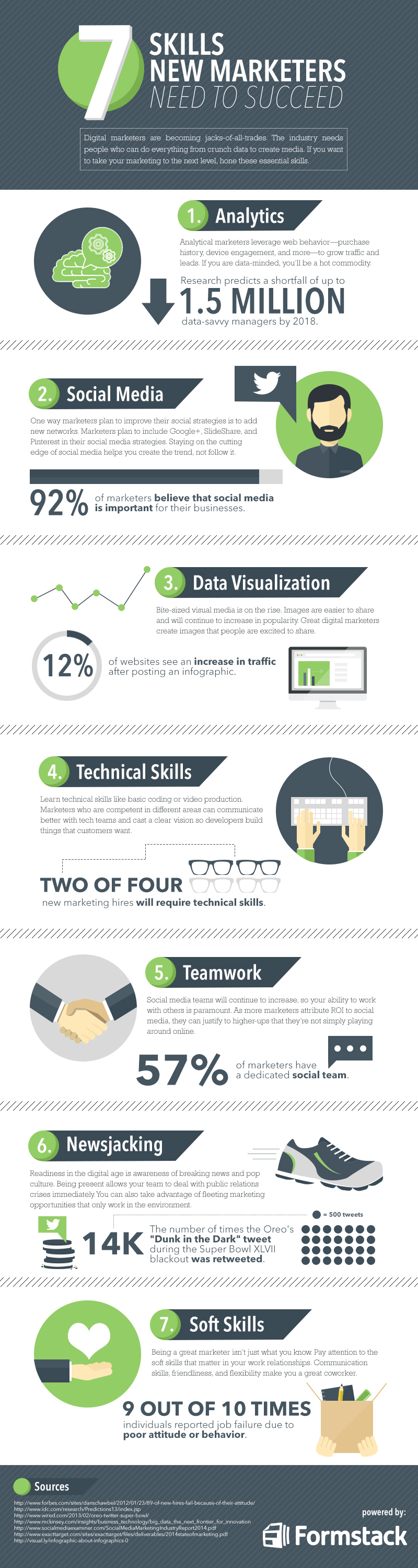
7 Skills New Marketers Need to Succeed


The industry is constantly changing and it can be a challenge to keep up. How can you tell the difference between the skills that are necessary and those that are just hype?
Checkout Formstack’s new infographic on the “7 Skills Marketers Need to Succeed.” They studied the trends and crunched the numbers to help digital marketers prioritize their goals. You might be surprised by which marketing skills are worth developing.

Saturday, 1 November 2014

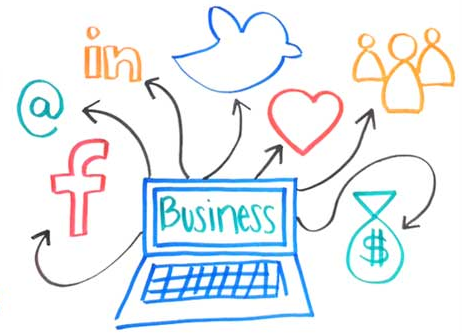
How To Grow Your Business Reputation Using Social Media


Take advantage of Social Media to help it grow your business reputation..
Building a good reputation online is crucial for any kind of business. Driving traffic to the website and increasing conversions and sales all depend on how potential buyers perceive your brand. It is therefore a very important aspect of branding and brand awareness to promote a business that is respectable, responsible, and perceived by consumers as a dependable ally.
Today, consumers are very smart and proactive when it comes to learning more about a brand before they use it. It is quite common for consumers to do a background research on a company or manufacturer through the use of the Internet before entering into a business transaction with them. A nationwide study conducted in the United States revealed that around 40% of adults do a background check online, and 45% of those who do have found something significant change their minds about making a purchase.

Begin Your Social Media Venture By Playing Around The Different Networks

Here’s an idea of what each of these sites can offer your business. Twitter is the type of network that can definitely help any type of business or niche to build a strong reputation, make more connections, start gathering followers and attract customers. LinkedIn as many of you all know is more business-focused, so it’s a good social media network to be in for B2B companies.
Pinterest and Instagram are fantastic to show the world in images what your business or services are all about. If you like “image blogging” you should definitely get involved and start using Pinterest and Instagram. And Facebook is all about more “fun”, “games”, “family”, however Facebook is the number #1 social media network in the world making it work great for products that have the capacity to develop fanatical fans.

Use Social Media To Hear What Your Customers Are Talking About

Consumers are also very vocal about what they think of a product or service, and they waste no time in dishing out their thoughts to their friends and family. You do not even have to pay anyone so that you can have ongoing conversations about your products or services. Social media is now the platform of choice of millions of people when they want to share their opinions, and insights. Because of the huge role that it can play in branding and marketing a product, you need to learn how to make good use of the information available on social media in building your reputation.
There are always two sides to a story, and this means that you must expect both negative and positive feedback from customers. Not only will you be able to have actual feedback from the people who are using your products. You will also have all the information that you need in order to make improvements. Acting on customer feedback will help your brand. This is because more people will buy something that has been made better for them. Being responsive to the needs of the customers also improves their opinion of your company. This is how listening in can help grow your business reputation using social media.

Interact With Your Customers And Give Them A Positive Experience

Listening in on conversations is one thing. Being an active participant is another. A company that addresses complaints in a polite and professional manner is perceived by the public as a brand that is responsive to their plight. In the meantime, ignoring complaints altogether is not usually received well. In fact this is a move that can ruin your reputation. It is altogether too easy to participate in an online argument, but this must be avoided, lest the brand be perceived as unprofessional and incapable of accepting criticism. There are also many social media tools that make it easy for businesses to keep tabs on the conversations that go on in social media networks such as Twitter, Facebook, MySpace, Google+ and others.
People spend time in social media to be entertained and to have a positive experience. Make sure that your conversations with your customers leave a positive impression. They might not immediately buy your brand, but your product will be the first option they will think about when the need arises because they think of your business in a positive light.

Assign Dedicated Personnel To Monitor The Company’s Social Media Presence

It is also advisable for a small business to assign a manager that will focus on building the company’s social media reputation. The additional overhead cost for your business can help in the long run. It is wise to invest on a competent person who will manage your social media presence. Creating and implementing a focused social media campaign is no small task, and though it takes a lot of work and dedication, the payoff is huge—brand awareness coupled with a good social media reputation is very important for a business to succeed. There are established best practices and guidelines to follow. But it is important to have dedicated personnel making sure that the company has social media presence and that all the concerns addressed to the company via social media are acted upon promptly and consistently.

The manager must present monthly performance reports to the management so that any recommended change in strategy can be planned and implemented without delay and applied as soon as possible. Remember taking action right away is important. The report must also provide details about the following parameters:
  • Audience demographics
  • Social reputation insights
  • Engagement measures
  • Strategies that offer best results
Knowing about the details gives the company the means to formulate the most adequate focused social media campaign to not only help grow your business reputation using social media but to also help it build trust as well. The same information can also be used to defend its online reputation effectively. And remember that your competitors are already using modern social media marketing tools so why shouldn’t you..